

Unchained
On Black cowboys, erased histories, and the stories Hollywood left behind.

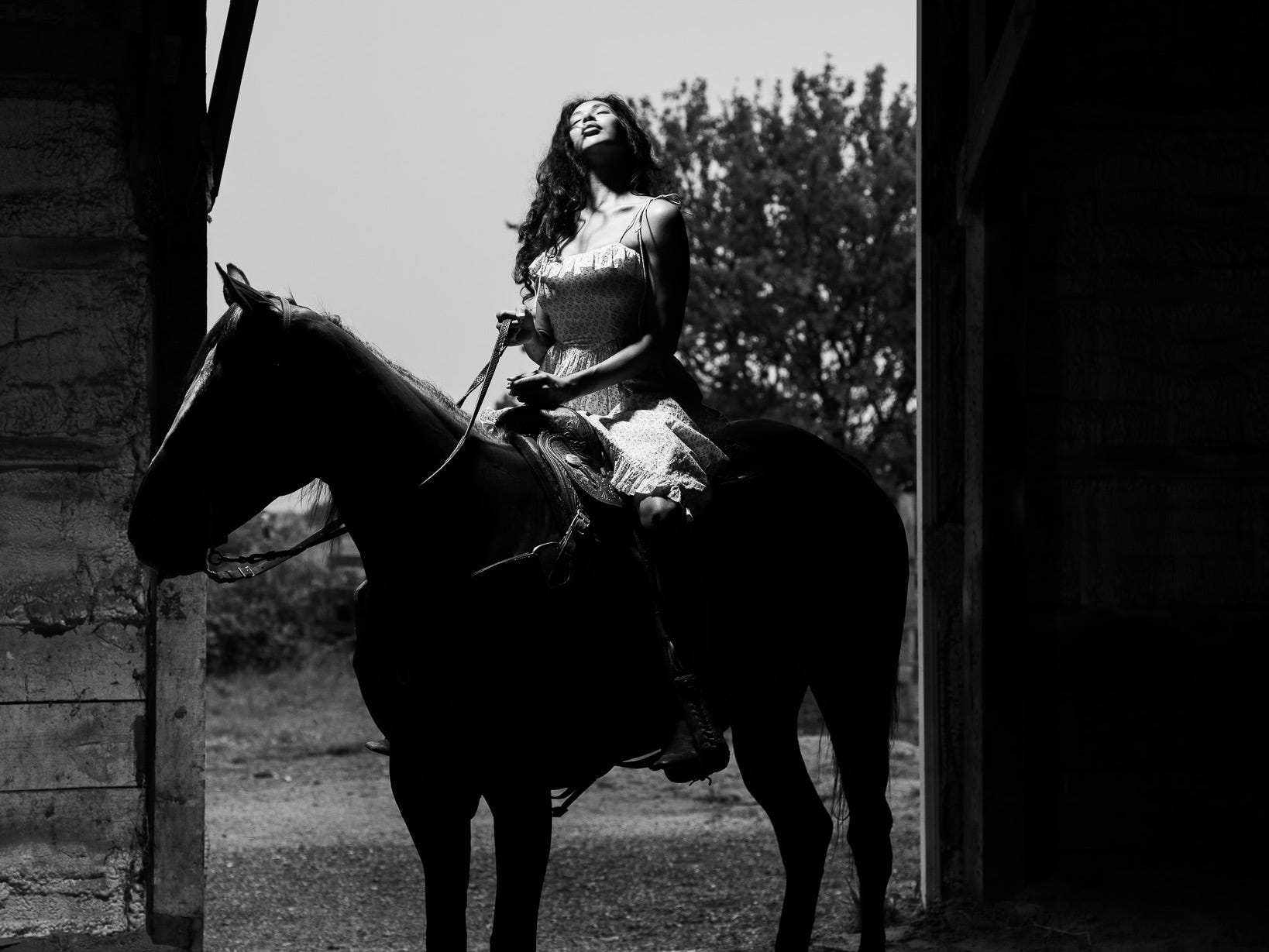
When I was a little girl, I never understood my daddy’s obsession with Westerns.
To me, they all looked the same: horses, dusty roads, old towns, and a cast of people who rarely looked like us.
My daddy loved them anyway.
He loved horses. He loved stories about the frontier. He could sit for hours watching a Western while I wondered why anyone would voluntarily spend their afternoon watching people ride through the desert.
What I didn’t know then was that the version of the American West I was seeing wasn’t the whole story.
Like so much of American history, parts of it had been edited.
And I thought about the history most of us never learned.
Because the cowboys were Black, too.
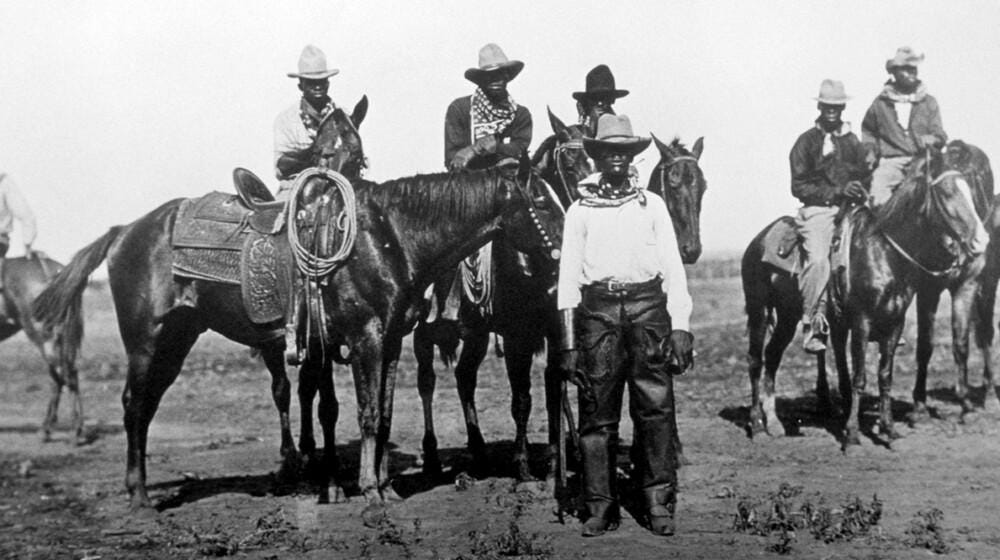
In fact, historians estimate that roughly one in four cowboys in the American West was Black.
After emancipation, many newly freed Black men faced limited economic opportunities in the Jim Crow South. For those who had experience managing livestock and cattle, the expanding cattle industry in the West offered something that was increasingly difficult to find elsewhere: steady work, mobility, and a degree of independence.
The open range wasn’t free from racism, but it often rewarded skill in ways other industries did not. A man who could ride, rope, track cattle, and survive months on the trail had value. Black cowboys became trail drivers, wranglers, bronc busters, ranch hands, and trail bosses. They helped move millions of cattle across the country and played a significant role in building the American cattle industry after the Civil War.
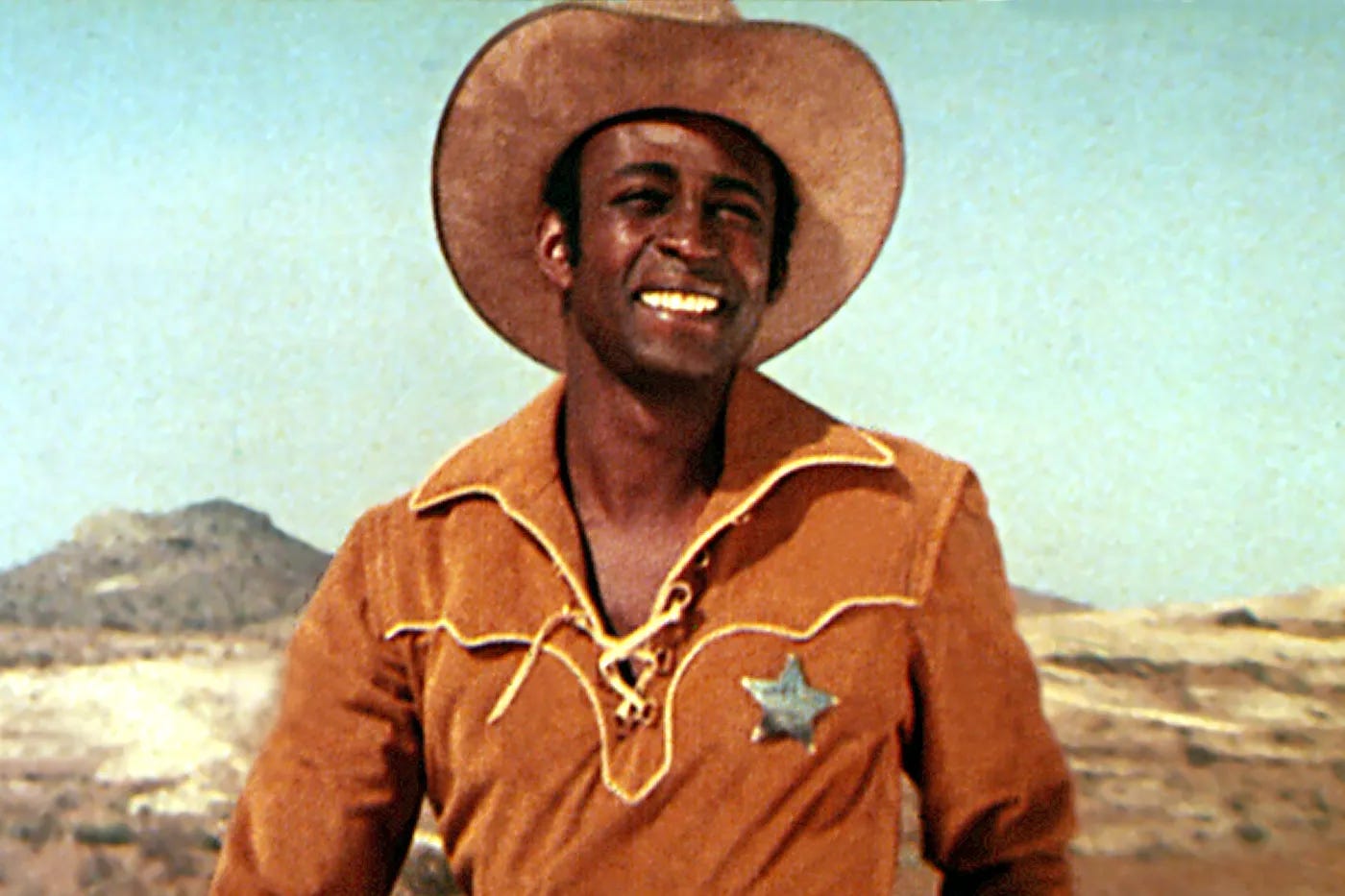
Yet when Hollywood turned the American West into mythology, many of those stories disappeared.
The cowboy became white.
The history became simpler.
And generations of Americans inherited a version of the West that left many of its original characters behind.
The irony isn’t lost on me.
As a child, I rejected Westerns because I didn’t see myself in them.
Now I realize I was there all along.
Not necessarily me, but people who looked like me. People whose stories were never centered. People whose contributions became footnotes while someone else became the face of the legend.
And that’s what made this photoshoot feel different. I wasn’t pretending to be a cowgirl. I was stepping into a history that had always belonged to us.
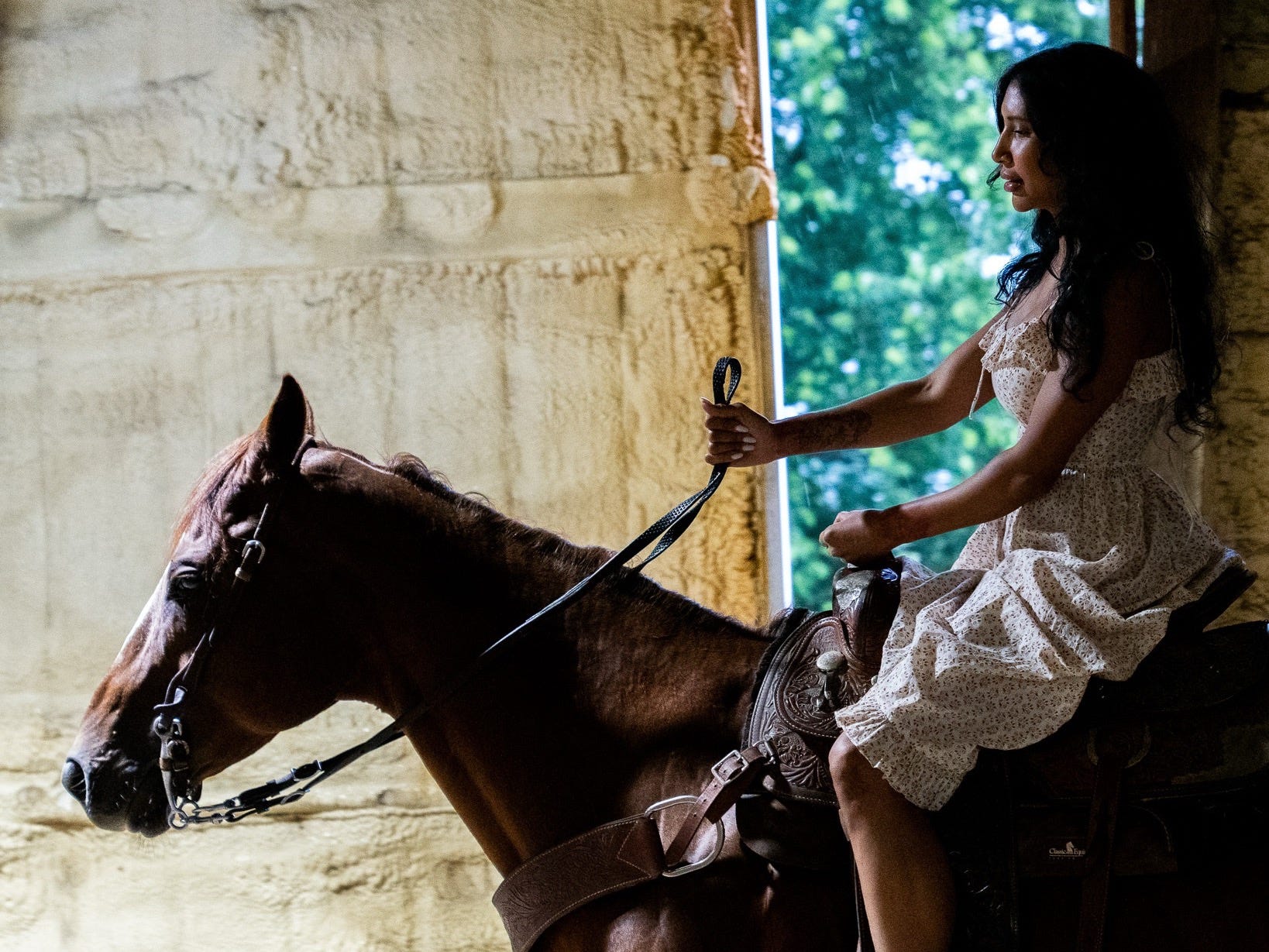
Last week, I found myself climbing onto a horse at a Black-owned ranch.
The timing wasn’t intentional, but it felt meaningful. Juneteenth is approaching. Father’s Day is around the corner. And my daddy, who passed away last year, has been on my mind heavy.
Standing there in my boots, looking out across the ranch, I thought about him.
My daddy loved horses. He loved Westerns. Growing up in Mississippi, those stories meant something to him long before I understood why. As a child, I couldn’t see the appeal. The versions I saw on television rarely included people who looked like us, and I certainly didn’t see myself reflected in them.
Now I wonder if he saw something I couldn’t.
Maybe he wasn’t watching because of who Hollywood put at the center of the story. Maybe he was watching because he understood that Black people had always been part of it.
I felt connected to him in a way I didn’t expect.
That’s one of the strange things about grief. You spend so much time missing the person that you don’t realize you’re also searching for them. You find them in old songs. In recipes. In stories relatives tell at family gatherings. In habits you didn’t realize you inherited. In the things they loved that suddenly become more interesting after they’re gone.
You start paying attention.
You start asking questions.
You start looking for pieces of them everywhere.
Losing my daddy has made me notice things I once overlooked. It has made me curious about the things that shaped him, the things that brought him joy, the things that felt like home to him.
A horse. A ranch. A Western playing in the background.
Years ago, I would have dismissed all of it. Now, it feels different.
Maybe that’s part of getting older. Maybe it’s part of grief. Maybe it’s both.
As Juneteenth approaches, I find myself thinking about freedom, legacy, and the stories we inherit. Black people have always been creators, builders, innovators, leaders, and architects of culture.
We are not new to the story. We have always been a part of it.
The lesson isn’t just about history. It’s about remembering who you are when the world tries to tell the story without you. It’s about understanding that your roots run deeper than what you were taught and your legacy is bigger than what was recorded.
Know your roots. Water yourself. Take up space. Tell your story anyway.
Juneteenth is often described as a celebration of freedom, but it is also a reminder of how much history remains hidden in plain sight. How many stories are missing from the versions we were taught. How much of our inheritance exists beyond textbooks, waiting to be rediscovered.
Not just the stories we are taught, but the ones we have to uncover for ourselves.
The story of Black cowboys is one of those stories. So is the story of my father.
Both remind me that history is bigger than the version we’re often given. That there are people whose contributions shaped the world, even when they weren’t centered in the telling. And that sometimes the things we think have nothing to do with us are actually part of our inheritance.
I didn’t grow up riding horses.
But last week, sitting on one, I felt connected to a history I had never fully understood and to a man I miss every day.
For a moment, they felt like the same thing.